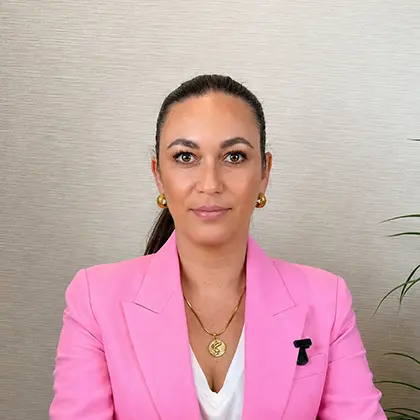
By Alina Scerri
Most people assume that the value of an investment migration advisor is measured by how many approvals they secure. After more than a decade in residence and citizenship by investment, I have come to believe something closer to the opposite: some of the most important advice I give is the recommendation not to apply at all.
That position is commercially inconvenient. Turning away a prospective client means turning away a fee. But this is an industry built on decisions that are difficult to reverse and expensive to get wrong, and in that environment an advisor’s reputation is worth far more than any single mandate. Reputation, in my experience, is built precisely in the moments when it would be easier—and more profitable—to look the other way.
Over the past decade I have had the privilege of working across a wide range of residency and citizenship by investment programmes, including one of the most rigorous in the world: Malta’s naturalisation framework for exceptional services by direct investment. Working within a system that applies some of the highest due diligence standards anywhere fundamentally shaped how I approach every client relationship.
One lesson became clear very early in my career.
Due diligence does not begin when a government reviews an application. It begins in the very first conversation between client and advisor.
For that reason, I invest significant time in understanding a client before recommending any solution. I ask questions that are sometimes uncomfortable. I explore areas many people naturally hesitate to discuss with someone they have only recently met—personal finances, family circumstances, business interests, and past legal matters.
I understand that hesitation. Trust is not built overnight, and these conversations touch the most sensitive parts of a person’s life. Yet complete honesty from the outset is one of the strongest predictors of a successful application. My role has never been to judge a client. It is to identify potential concerns before they become expensive mistakes.
Why “not now” can be the most valuable answer
There have been occasions where I concluded that a client had little or no realistic prospect of approval under a particular programme. Sometimes that was because of information they disclosed. Sometimes it was because of information they initially chose not to disclose. In other cases, the issue was simply timing—a pending matter that needed to resolve, or a source-of-funds trail that needed to be properly documented first.
Those conversations are never easy. No professional enjoys telling someone that the answer is “not now,” or even “not at all.” But honest counsel is part of the service a serious client is paying for. Submitting an application that is unlikely to succeed may generate a fee in the short term, while risking something far more valuable: the client’s trust, their capital, and an advisor’s professional integrity.
The strategic point is easy to underestimate. A refused application is rarely a neutral event that simply returns a client to the starting line. Many programmes require applicants to declare prior refusals, and due diligence findings increasingly move between jurisdictions and providers rather than staying contained within a single file. A rejection in one programme can therefore become a disclosable fact that follows an applicant—complicating, and in some cases undermining, their eligibility elsewhere. Filing a weak application is not just a wasted fee. It can quietly reduce the optionality a client spent years trying to build.
“By upholding the highest standards of integrity and professionalism, due diligence providers and agents alike play a critical role in safeguarding the integrity and credibility of these programmes.” — Melissa Kelley-Hilton FIMC, Founder & CEO, Hilton Global Associates (Investment Migration Council, 2024)
That principle is not abstract. The agent who pre-screens a client honestly is doing the same work a government will later do—testing for politically exposed connections, gaps in the source of wealth, and undisclosed history—at a stage when problems can still be addressed rather than recorded as a refusal.
Credibility is the asset that compounds
More than once, I have advised prospective clients not to proceed. Some appreciated the transparency. They took the advice, addressed the issues where it was possible to do so, or explored more suitable alternatives. Many stayed in touch over the years, and several went on to introduce friends, relatives, and business partners—not because I had sold them a programme, but because I had earned their confidence.
Others chose a different path. A few decided to apply through other firms after being told that approval was unlikely. In most of those cases, the applications were ultimately refused. I have never taken satisfaction in being proven right. If anything, those outcomes reinforced a principle I try to uphold: an advisor’s responsibility is not to tell clients what they want to hear, but to tell them what they need to know.
For high-net-worth families, this has a practical implication when choosing whom to work with. An advisor who never says no is not necessarily easy to work with—they may simply be optimising for transactions rather than outcomes. The more useful signal is whether an advisor is willing to interrogate a case honestly, raise inconvenient questions early, and decline work that does not serve the client. That willingness is difficult to fake and expensive to maintain, which is exactly what makes it credible.
The investment migration industry is built on life-changing decisions—decisions that affect families, businesses, future generations, and significant financial commitments. That is why clients deserve objective advice, even when it means recommending against a particular programme. Sometimes the best professional service is not finding a way to submit an application. Sometimes it is having the honesty to say, “This is not the right path for you.”
That may cost a transaction. But in my experience it builds something far more durable: credibility. And in an industry built on trust, credibility is the investment that continues to pay dividends long after a single application is complete.
FAQ
Why would an investment migration advisor tell a client not to apply?
A credible advisor assesses the realistic probability of approval before any application is filed. If disclosed information, undisclosed history, or poor timing makes refusal likely, advising against the application protects the client from unnecessary cost, a damaging record, and a false sense of progress. The short-term fee is rarely worth the long-term consequences of a refusal.
Does a refused citizenship or residence application affect future applications?
Often, yes. Many programmes ask applicants to declare prior refusals, and due diligence findings can be shared between jurisdictions and providers. A refusal in one programme can therefore become a disclosable event that complicates or undermines eligibility elsewhere, which is why a weak application should not be submitted simply because a client is willing to pay for it.
What information should you disclose to an advisor before applying for second citizenship?
Complete and early disclosure of source of wealth and funds, business interests, prior visa or citizenship refusals, litigation, regulatory matters, and any past legal issues. These are precisely the areas government due diligence will examine. Raising them at the first conversation allows an advisor to manage or resolve concerns before they become costly mistakes.
How does early due diligence reduce the risk of a rejected application?
Pre-screening at the advisory stage mirrors the checks a government will later perform, surfacing politically exposed person flags, source-of-funds gaps, and disclosure issues while they can still be addressed. Identifying and resolving these concerns before filing improves the quality of the application and reduces the chance of an avoidable refusal.
Sources referenced (public): Investment Migration Council, “Navigating the Complexities of Citizenship by Investment Due Diligence,” by Melissa Kelley-Hilton FIMC, Founder & CEO, Hilton Global Associates (2 July 2024).