For internationally mobile professionals and entrepreneurs who want a European base without giving up their global career, Spain’s Digital Nomad Visa offers a structured route to live in one of Europe’s most desirable countries while working remotely for foreign clients or employers. It also opens a longer-term pathway towards permanent residency and ultimately Spanish – and therefore EU – citizenship, subject to residence, integration and future legal changes.
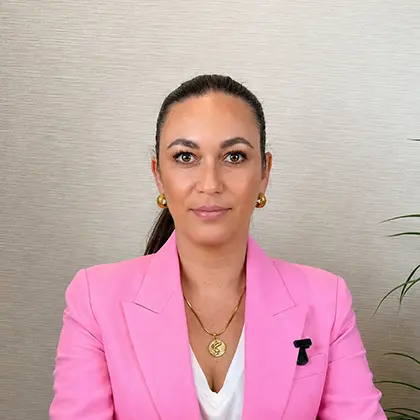
For Spain residency enquiries, Stellar Pass combines senior advisory with selected regional collaboration where local support is required. Speak with Alina to assess eligibility, timing, documentation and whether Spain is the right route for your profile.
Request a Spain Residency ReviewKEYPOINTS

Live in Spain while working remotely for non-Spanish employers
For non-EU/EEA nationals and their families
REQUIREMENTS

Remote income around 200% of the Spanish minimum wage
Private health insurance & proof of accommodation
TIMEFRAMES

Government decision usually in about 20–30 working days
Residence options of up to 3 years, renewable
Why Spain?
Spain pairs a Mediterranean lifestyle with a highly developed infrastructure: fast internet, major international airports, excellent healthcare, and globally recognised universities. For families, it offers a safe EU jurisdiction with comparatively low tuition fees at public universities and a national health system that provides near-universal coverage for legal residents. For high-net-worth individuals, it can function as both a lifestyle upgrade and a strategic “Plan B” within the EU framework.
A successful digital nomad route can ultimately lead to long-term residency and, over time, one of the world’s top-tier passports, with Spanish citizens currently enjoying visa-free or visa-on-arrival access to close to 190 destinations worldwide.
Key Highlights of the Spain Digital Nomad Visa
- Legal basis: The visa and residence authorisation for international remote work were introduced under Spain’s Start-up Law (Law 28/2022), creating a dedicated route for “international teleworkers”.
- Two main pathways:
- Consular visa for international teleworkers – usually up to 1 year, applied for at a Spanish consulate.
- In-country residence authorisation via the UGE-CE (large companies and strategic sectors unit) – typically granted for up to 3 years, renewable for a further 2 years.
- Remote work focus: You live in Spain but work primarily for non-Spanish employers or clients. Limited income from Spanish clients is possible for freelancers under specific caps.
- Family inclusion: Spouses/partners and dependent children can usually be added to the main application if higher income thresholds are met.
Eligibility Criteria: Who Can Apply?
Typical eligibility criteria for Spain’s Digital Nomad Visa include:
- Being a non-EU/EEA/Swiss national.
- Carrying out remote work for companies or clients located outside Spain, either as:
- a remote employee of a foreign company, or
- a self-employed professional / freelancer with predominantly foreign clients (Spanish-sourced income generally capped at around 20%).
- Holding a university degree or equivalent higher education, or demonstrating at least three years of relevant professional experience.
- Maintaining a clean criminal record in the countries where you have recently lived, usually for the past five years.
- Having private health insurance that is valid across Spain (or being registered with the Spanish social security system where applicable).
- Providing proof of accommodation in Spain, such as a rental contract, property purchase, or other acceptable evidence.
The Spanish authorities also expect your foreign employer or clients to be properly registered and operating for at least one year, and they often ask for confirmation that your role is fully remote and compatible with living in Spain.
Financial Requirements
The financial criteria for Spain’s Digital Nomad Visa are pegged to national reference values (principally the minimum wage). As of 2025, most guidance indicates that applicants must show gross monthly income of roughly €2,750–€2,800 for the main applicant (around 200% of the Spanish minimum wage, updated periodically), with additional amounts required for each accompanying family member.
For dependants, thresholds are typically calculated as a percentage of the same benchmark – approximately 75% for a spouse or registered partner and 25% per child. Immigration lawyers will usually combine regular income (salary, freelance invoices, retainers) with bank balances or savings to demonstrate that you comfortably exceed the minimum.
Because these figures are adjusted over time and can be applied slightly differently by each consulate, it is important to check the current numbers at the moment of application and structure your financial evidence accordingly.
Application Routes and Timelines
There are two main ways to secure your Spain Digital Nomad status:
- Apply from your home country
Submit your international teleworker visa application at the Spanish consulate responsible for your place of legal residence. Once approved, you receive a visa (typically up to one year) which allows you to enter Spain and then convert to a longer residence card. - Apply from within Spain
Many applicants enter Spain under a Schengen visa or visa-free regime (where available) and file directly with the UGE-CE in Spain. When granted, this authorisation usually gives you up to three years of residence from day one, renewable for a further two years if you still meet the criteria.
Under the Start-up Law framework, the administration aims to decide applications within around 20 working days. In practice, most well-prepared cases are resolved within 20–30 working days, though timelines can vary between consulates and individual files.
From Residency to Permanent Residence and Spanish Citizenship
Time spent in Spain under the Digital Nomad residence authorisation can, in principle, count towards long-term and citizenship timelines, provided that you maintain continuous legal residence, pay taxes where required, and pass the later nationality tests.
- After 5 years of legal residence, many foreigners can apply for long-term or permanent residence in Spain, subject to standard conditions.
- After 10 years of legal residence, most nationalities may become eligible to apply for Spanish citizenship by residence, assuming integration, language and clean-record criteria are met.
- Certain nationalities – especially from Ibero-American countries, Andorra, the Philippines, Equatorial Guinea, Portugal, and people of Sephardic origin – can often apply after just 2 years of residence, thanks to Spain’s reduced timeframes.
A Spanish passport unlocks EU citizenship rights and one of the world’s strongest mobility profiles, making this pathway particularly appealing for globally mobile families planning for the next generation.
Quality of Life, Healthcare and Education
Spain is consistently recognised for its high quality of life, from its climate and food culture to its coastal cities and cosmopolitan hubs like Madrid and Barcelona. For residents, the national health system (Sistema Nacional de Salud) offers virtually universal coverage and is funded mainly through taxation, with many procedures free at the point of care. Private health insurance is widely available and often required at the visa stage, but many residents later transition into or supplement it with access to Spain’s robust public system once they are eligible.
Families benefit from affordable public education and access to reputable universities where tuition fees are generally lower than in many other Western European countries. For internationally minded households, bilingual and international schools are available in major cities and resort areas, and Spanish qualifications are aligned with the European higher-education framework.
Expert Insight: Preparing a Strong File
“Consulates are looking hard at professional experience and qualifications – you need a coherent story and complete documentation before you submit.” Raquel Moreno, Spain immigration lawyer (via Moving to Spain)
In practice, this means aligning your CV, contracts, reference letters, invoices, tax returns and bank statements so they tell one clear story: a stable, remote career with established foreign clients or employers. At Stellar Pass, we work with specialist local counsel to structure applications for digital nomads who value both compliance and long-term optionality.
Frequently Asked Questions (FAQ)
How long can I stay in Spain on the Digital Nomad Visa?
If you apply via a consulate, you typically receive a visa of up to one year, which you can later convert into a residence card in Spain. If you apply directly from Spain through the UGE-CE, the initial residence authorisation is usually granted for up to three years and can be renewed if you continue to meet the criteria.
Does time on the Digital Nomad Visa count towards Spanish citizenship?
Where you hold a valid residence authorisation as an international remote worker and maintain legal, continuous residence, those years can usually count towards the 5-year benchmark for long-term residence and the 10-year (or 2-year for certain nationalities) benchmark for citizenship by residence. Formal nationality applications are handled separately and involve language and integration tests.
Can I bring my spouse and children?
Yes. The regime allows you to include a spouse or long-term partner and dependent children, and in some cases other dependants. You must, however, demonstrate higher household income – typically calculated as a percentage uplift on the main applicant’s threshold for each additional family member.
Do I have to pay tax in Spain as a digital nomad?
If you become tax-resident (normally by spending more than 183 days per year in Spain), you are generally taxed in Spain. However, many digital nomads may qualify for Spain’s special “expat regime” (commonly known as the Beckham Law), which can apply a flat rate on Spanish-source income and exempt certain foreign income for a limited period. Proper tax advice before moving is essential.
Can I work for Spanish companies on this visa?
The visa is designed primarily for foreign-sourced work. Employees usually must work for companies based outside Spain, while self-employed applicants are generally allowed to earn only a limited share of their revenue (often up to 20%) from Spanish clients. The exact position should be confirmed with local counsel when structuring your business model.
Is the Spain Digital Nomad Visa right for high-net-worth individuals?
For many HNWIs, the digital nomad route is attractive when they already have substantial foreign income and want a flexible, tax-aware way to base themselves and their families in the EU, without committing immediately to an investor or passive-income residence route. It can also be combined with future restructuring, investment or succession planning as circumstances evolve.
Plan Your Move to Spain
Whether your priority is lifestyle, education for your children, or securing an EU foothold as part of a broader wealth and mobility strategy, Spain’s Digital Nomad Visa can be a powerful tool when used correctly.
Our immigration and tax coordination team at Stellar Pass can help you assess whether this route fits your overall plan, prepare a compliant application with local counsel, and map out how your years of residence can support future goals such as permanent residency and citizenship.